
A Love Story Footnote

“What is left of a man and all his pride but bones.” —Jack Kerouac
Somewhere along the way, I learned that my ex-girlfriend had published a poem in The New York Times. The news arrived without ceremony, a fact presented in passing, and I accepted it for what it was. No jealousy, no bitterness…just another detail in the unfinished story of someone I once knew. She had always been a serious writer, the kind who sent her work into the world at the age of 19, (under a pen name she had used in college) certain it would find a home. By the time I met her, she had already written a book. After she had evaporated from my landscape, there were others.
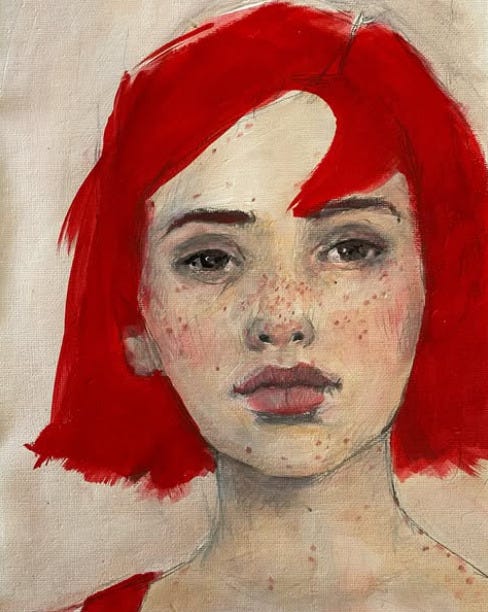
I read the poem. It had that careful, antiseptic cruelty of someone rewriting history for aesthetic purposes. In its lines were fragments of our life, rearranged, turned surreal—her eating kimchi in a laundromat, me carrying her home in my arms from a party, her vomiting that same kimchi onto my jacket after too many cocktails and Kool cigarettes. She wrote about the skyline, about fluorescent loneliness, as if she’d emerged from the wreckage purified. I stared at the words, the room humming with a kind of dull inevitability, and it occurred to me that I’d been erased long before she even knew she was capable of doing it.
Had she remembered these moments because of me, or had they dissolved into the warm tide of her own imagination, stripped of their private significance? I imagined a timeline where she had written these lines while I was still sleeping beside her, where she had already been processing our life into art while I, ignorant of these pen strokes, had been living it.
After reading the poem, I sat motionless in my chair and stared out the window. The city outside pulsed and moved, indifferent to my thoughts. I went out for a walk, and the streets were wet from the previous night’s rain. I walked without direction, past coffee shops filled with people working on their laptops, and past bookstores with their artful displays of newly published novels. I considered stepping inside, picking up one of her books, and running my fingers over the pages. But I didn’t.
Instead, I continued walking until I reached the park and sat on a bench watching the trees sway. I remembered how she had once told me that poetry was a way of making sense of things, of pressing order onto the untamed edges of memory. And maybe she was right. Maybe the city in her poem had nothing to do with me. The uncertainty pressed against my ribs, weightless and unrelenting. I let it stay.
What a passage!
"Had she remembered these moments because of me, or had they dissolved into the warm tide of her own imagination, stripped of their private significance?"
Beautiful